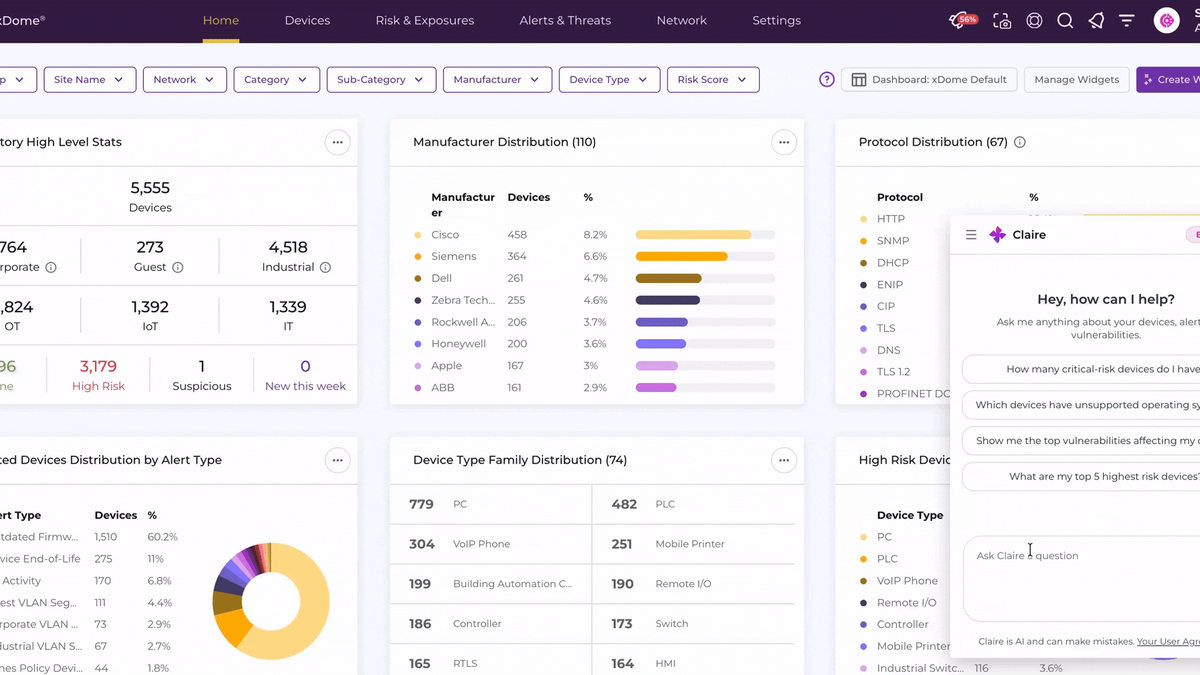
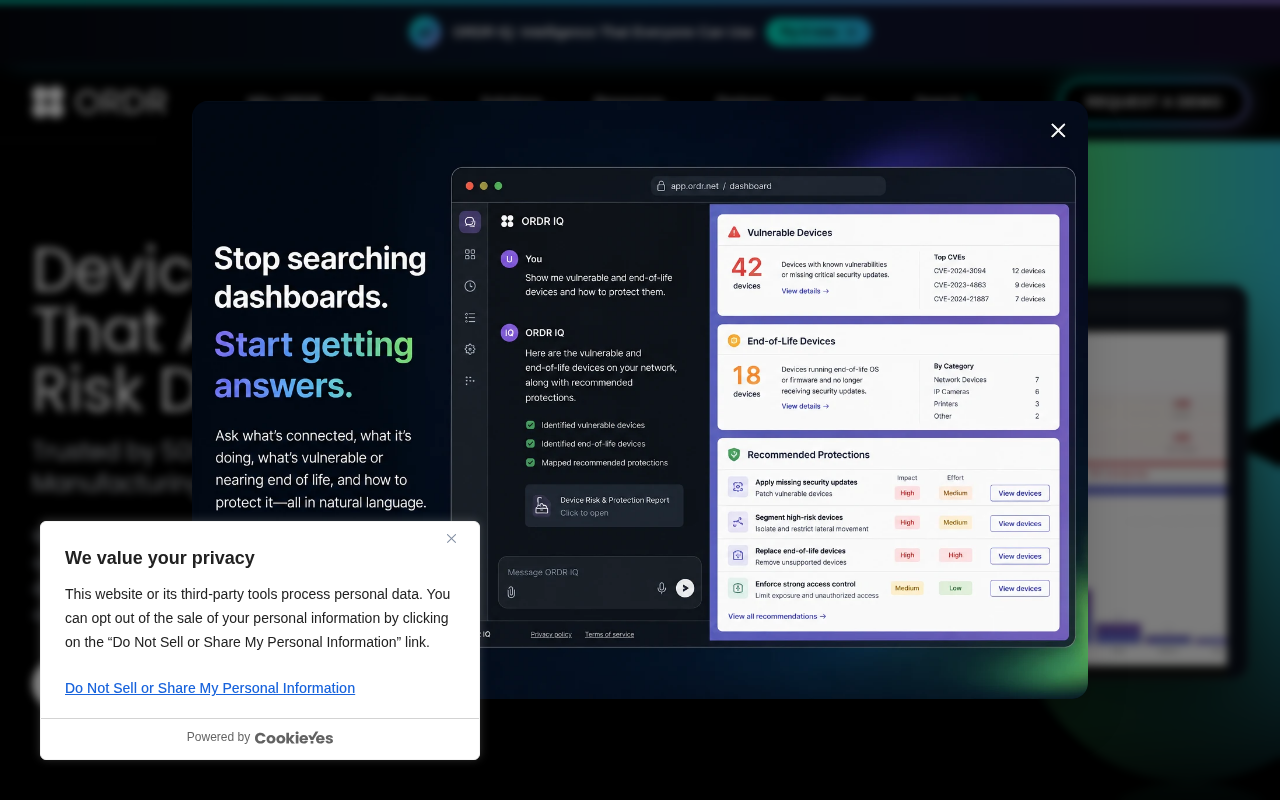
Hospital security teams that need to find and protect every connected device on the network, from infusion pumps to building controls, often compare Claroty and Ordr. Both watch network traffic to list each device, flag known weaknesses, and rank which risks to fix first. Claroty, based in New York, secures factories and commercial buildings as well as hospitals, and it bought the healthcare device security company Medigate in 2022. That product is now Claroty xDome for Healthcare. Ordr, led by co-founder Pandian Gnanaprakasam, sells to healthcare and other industries and includes the network rules that keep a risky device walled off from the rest of the network.
Claroty
7.5Overall
Recommend
Best for
Health systems with many connected medical devices plus building systems such as heating, cooling, and power controls
Watch-out
Outpatient groups with few connected medical devices or building systems
Ordr
7.5Overall
Recommend
Best for
Health systems that want to see and control risk on medical devices, smart building equipment, and other connected gear
Watch-out
Teams that will not act on the device risks it finds
How they differ
Axis
Claroty
Ordr
Building and industrial systems
✓Stronger
Covers medical devices plus heating, cooling, electrical, and building automation systems, drawing on Claroty's industrial security work.
Covers medical devices, smart building equipment, and other connected gear.
Customer ratings
✓Stronger
xDome for Healthcare, formerly Medigate, was named Best in KLAS for healthcare device security for the fifth year in a row in 2025, with a score of 95.4 out of 100.
Protects three of the four largest U.S. healthcare delivery organizations.
Walling off risky devices
Finds and ranks risks, then passes network rules to the hospital's own firewalls and access tools.
✓Stronger
Writes and enforces the network rules that wall off risky devices, so a hospital needs fewer extra tools.
Finding devices and ranking risk
≈Similar
Scores 7.8 for seeing what is on the network and 7.6 for ranking which risks to fix first.
≈Similar
Scores 7.7 for device risk and visibility and 7.6 for its connected-device product.
Fitting hospital work
≈Similar
Needs network access plus help from biomedical engineering, the staff who maintain medical equipment, and the facilities team.
≈Similar
Needs network access and biomedical engineering staff willing to act on device changes.
Knowing what you will pay
≈Similar
Priced by sites, beds, or discovered devices, plus network sensors and services, with no public price list.
≈Similar
Priced by device count, sites, and modules, with no public price list.
Verdict
Claroty is for a large health system that wants one tool to cover medical devices and the building systems that keep the hospital running, and that puts weight on the KLAS customer ratings its healthcare product has earned. Ordr is for a security team that wants the same product to find risky devices and wall them off, without buying a separate tool to enforce the rules.
Walk away from both if you run outpatient clinics with few connected devices, or if no one will fix the risks once they are found, since both are priced for hospitals that act on what they find. Walk away from both if you only need antivirus-style protection on staff laptops, which neither replaces.