Diagnostics & imaging AI · Stroke imaging AI
Nicolab
Nicolab makes StrokeViewer, AI software that analyzes stroke CT scans, and Nicolab Assist, a collaboration app that lets stroke teams at different hospitals share images and coordinate treatment.
Strong fit
- Telestroke and regional stroke networks that need images and messages shared between hospitals
- Hospitals in Australia and Europe that want a vendor with local support
- Hospitals that buy imaging AI through the Harrison.ai Open Platform
Weak fit
- Large U.S. comprehensive stroke centers that want the platform with the most U.S. studies
- Hospitals that want AI across many conditions beyond stroke
- Buyers who need a published price list

Bottom line
Nicolab is a Melbourne, Australia and Amsterdam, Netherlands company that spun out of Amsterdam University Medical Center after the MR CLEAN stroke trial. Its StrokeViewer software analyzes stroke scans, and its Nicolab Assist app lets doctors at different hospitals see the images and coordinate treatment from a phone or computer. Stroke networks pick it when sharing a case between hospitals is as important as the AI.
Score breakdown
Weights: Outcomes 35% · Product 30% · Implementation 20% · Pricing clarity 15%.
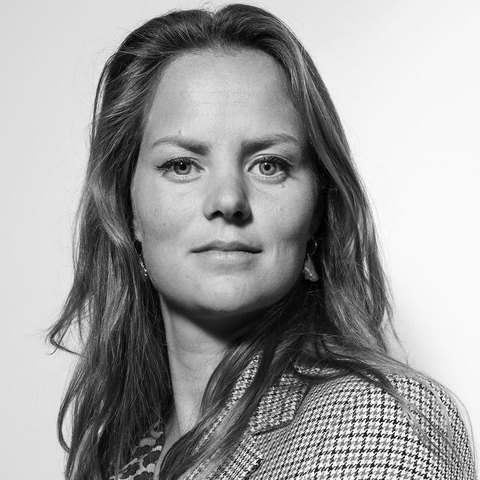
Merel Boers and Renan Sales-Barros, who worked together as researchers at the Academic Medical Center in Amsterdam, founded Nicolab in 2015. That followed MR CLEAN, a Dutch trial that proved the benefit of endovascular treatment, in which doctors remove the clot through a catheter, for patients with large vessel occlusion strokes. StrokeViewer flags large vessel occlusions and analyzes CT perfusion scans, and Nicolab Assist lets stroke teams at different hospitals view the same images and message each other. The company says the platform has helped more than 170,000 patients.
Nicolab raised AU$13 million in a 2021 pre-IPO round, and in 2023 said StrokeViewer was used in more than 200 hospitals, including the U.S. Department of Veterans Affairs. In November 2025 it received FDA clearance for its LVO triage and CT perfusion tools, and it says hospitals in Australia and Europe have performed 28 percent more thrombectomies in transferred patients in the early window. Charlie Bell, who joined as chief financial officer in 2021, became chief executive in September 2026, and the company plans to list on the Australian Securities Exchange in 2027.
Compare Viz.ai when a U.S. network wants the largest care coordination platform, RapidAI when a comprehensive stroke center wants the most published imaging evidence, Brainomix when a national program wants large real-world outcome studies, and Methinks AI when most hospitals scan with non-contrast CT only.
Competitor landscape
| Vendor | Overall | Ease of implementation |
|---|---|---|
| RapidAI | 8.1 | 7.6 |
| Brainomix | 7.8 | 7.7 |
| Viz.ai | 7.7 | 7.3 |
| Nicolab | 7.3 | 7.3 |
| Methinks AI | 6.8 | 7.0 |
Pricing
| Item | Detail |
|---|---|
| Model | Subscription quoted by Nicolab, with network contracts for regional and national stroke programs. It is also offered through the Harrison.ai Open Platform, which Nicolab describes as zero-markup. |
| What usually drives cost | Number of hospitals in the network, which StrokeViewer algorithms are used, and the number of Nicolab Assist users. |
| What to ask in diligence | Annual price per hospital and per user, how pricing differs through Harrison.ai, and the price of adding spoke hospitals. |
| Published pricing | No public list price. |
Prerequisites for purchase
| Need | Why it matters |
|---|---|
| What you need to get Nicolab to function | |
| Network owner across hospitals | Hub and spoke sites must agree on one workflow. |
| Scanner connections at each hospital | Images must stream to StrokeViewer automatically. |
| User list for Nicolab Assist | Neurologists, radiologists, and emergency doctors all need access. |
| Transfer protocol | The app helps only if transfers follow agreed steps. |
| Privacy review | Images and messages are shared across organizations. |
| What will maximize your value | |
| Start with telestroke hospitals | Remote review is where the app saves most time. |
| Measure door-to-needle and transfer times | Shows the network what changed. |
| Enroll every on-call neurologist | Gaps in the roster slow decisions. |
| Deal-breakers | |
| No network owner | |
| Hospitals will not share images | |
| Wants AI beyond stroke | |
Value creation time frame
| # | Stage | Typical range |
|---|---|---|
| 1 | Contract and privacy review | 4-8 weeks |
| 2 | First hub and spokes live | 1-2 months |
| 3 | Full network | 3-6 months |
Leadership

Methodology
| Weight | Factor | What it measures |
|---|---|---|
| 35% | Customer outcomes | Whether buyers get measurable operational or clinical-workflow results after go-live |
| 30% | Product | Capability depth, reliability, and fit for the job the category buys |
| 20% | Implementation | How hard it is to stand up, integrate, train, and stabilize |
| 15% | Pricing clarity | Whether a buyer can model total cost without a mystery quote |
| Label | Meaning |
|---|---|
| Highly recommend | Strong outcomes and product with manageable caveats |
| Recommend | Solid fit for the right buyer; know the tradeoffs |
| Conditional | Only with a specific use case or heavy caveats |
| Not recommended | Avoid for most buyers in this category |
Read our full methodology for how we weight scores and assign recommend labels.